WMS Activities

Overview

  • WMS Activities

    WMS Activities Overview

    WMS Activities are warehouse functions used to manage and maintain inventory after it has been received into Inspired. These activities allow warehouse personnel to relocate pallets, move inventory between pallets, adjust inventory quantities, perform inventory counts, and record other warehouse-related inventory activity.

    WMS Activities are primarily used when inventory already exists in Inspired and a warehouse employee needs to make a change to the inventory location, pallet assignment, quantity, or inventory count.

    Choosing the correct WMS Activity is important because each activity performs a different type of inventory operation.

    Pallet Moves
    A Pallet Move is used to move an entire pallet of inventory from its current warehouse bin to another bin without changing the inventory quantity, item, lot, or other inventory information associated with the pallet. Use Pallet Moves when the entire pallet is being physically relocated and the inventory itself is not changing.

    Common uses include:
    • Moving inventory to a different storage location.
    • Relocating a pallet within a cooler, freezer, dry warehouse, or other storage area.
    • Correcting the warehouse location in Inspired so it matches the pallet's physical location.
    • Moving a pallet from a temporary or receiving location into its designated storage bin.
    • Moving an entire pallet between warehouse areas.

    Important: A Pallet Move changes the pallet's warehouse bin/location. It does not change the quantity of inventory on the pallet.

    Pull Queues
    A Pull Queue is used to organize and guide the movement of one or more pallets to new warehouse locations. Instead of moving each pallet immediately, warehouse personnel can first place multiple pallets into a Pull Queue and then initiate the queue when the pallets are ready to be moved.

    Use Pull Queues when multiple pallets need to be organized for a planned move, especially when the pallets will be moved at a later time or as part of the same warehouse activity.

    Common Uses Include:
    • Grouping multiple pallets for the same warehouse move.
    • Staging pallets for movement at a later time.
    • Organizing pallet moves by a specific date and time.
    • Moving several pallets to the same general warehouse area.
    • Providing warehouse personnel with a guided list of pallets to move.

    Inventory Adjustments
    Inventory Adjustments are used to increase or decrease the quantity of inventory assigned to a pallet. Unlike Pallet Moves, which change the pallet's location, or Move Inventory Units, which transfer inventory between pallets, Inventory Adjustments change the actual quantity of inventory recorded in Inspired.

WMS Activities

  • Pallet Moves

    Pallet Moves Overview

    A Pallet Move is used to move an entire pallet of inventory from its current warehouse bin to another bin without changing the inventory quantity, item, lot, or other inventory information associated with the pallet. Pallet Moves are commonly used when warehouse personnel need to:

    • Move inventory to a different storage location.
    • Relocate pallets within a cooler, freezer, dry warehouse, or other storage area.
    • Correct the physical location of a pallet in Inspired so the system matches the pallet's actual warehouse location.
    • Move a pallet from a temporary or receiving location into its designated storage bin.
    • Move inventory between warehouse areas when the entire pallet is being relocated.

    Important: A Pallet Move changes the bin/location of the pallet. It does not change the quantity of inventory on the pallet.

    When to use Pallet Moves
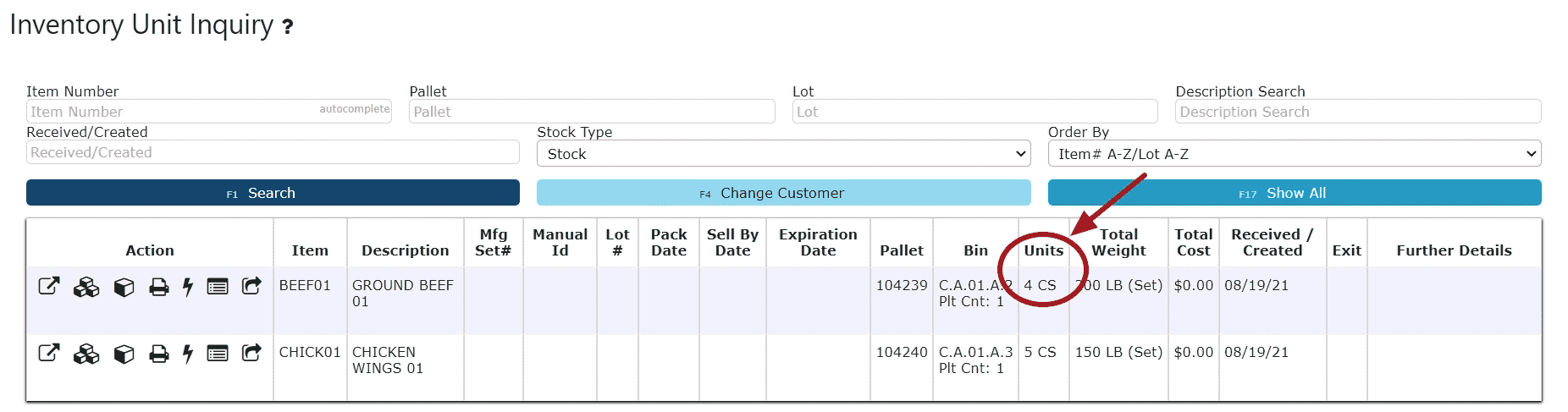
    Use Pallet Moves when the entire pallet needs to be relocated. For example, if a pallet is currently assigned to bin C.A.01.A.2 in Inspired but the physical pallet needs to be stored in G.A.01.A.1, a Pallet Move updates the pallet's inventory location from the old bin to the new bin.

    The inventory itself remains on the same pallet. The move simply updates where Inspired considers that pallet to be located.

    Pallet Moves VS. Other WMS Activities
    Inspired provides several WMS Activities for different inventory situations:

    Pallet Moves — Moves an entire pallet to another bin.
    Pull Queues — Creates a planned/grouped move for one or more pallets that will be moved later.
    Inventory Adjustments — Changes the quantity of inventory on a pallet.
    Move Inventory Units — Moves specific units from one pallet to another.
    Scan Inventory Units — Moves individual catch-weight inventory using scanned weight information.
    Cycle Counts — Used to count and verify inventory.

    Important: Selecting the correct WMS Activity is important. If the entire pallet is physically being relocated and the inventory quantity is not changing, use Pallet Moves.

    Moving a Pallet
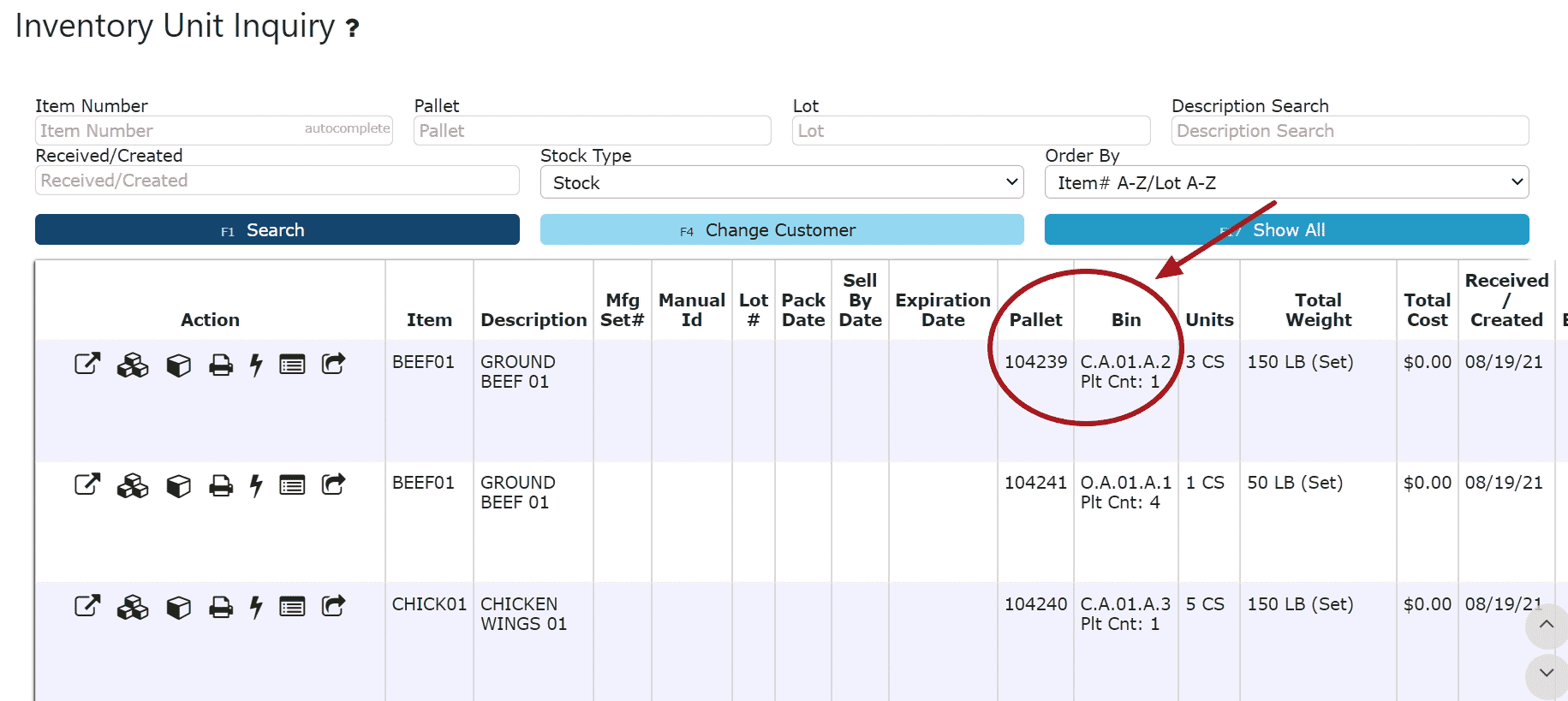
    In this example, pallet 104239 is being moved from bin C.A.01.A.2 to bin G.A.01.A.1.


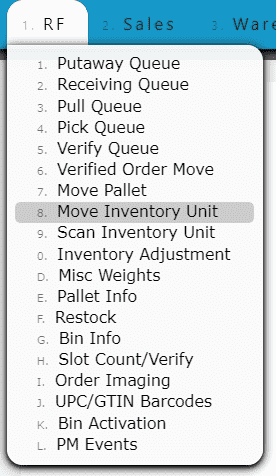
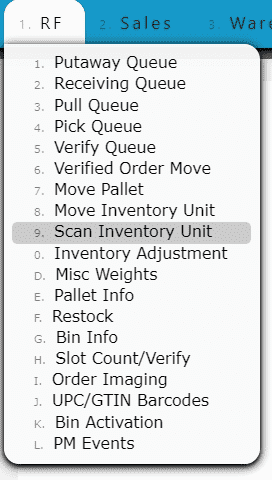
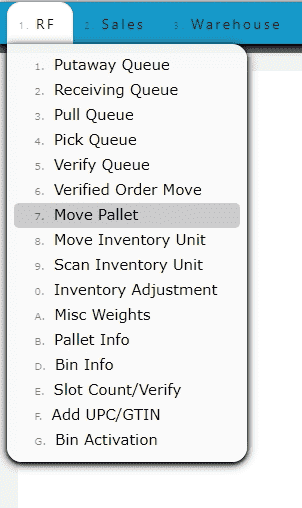
    1. Go to the RF menu & click on the Move Pallet sub-menu.

    2. Enter or scan the Pallet ID of the pallet being moved, then click Next Step button.

    3. Enter or scan the bin where the pallet is currently located, then click the Next Step button.

    4. Enter or scan the new bin where the pallet will be stored, then click on the Next Step button.

    5.  After the new bin has been entered and the move is confirmed, the pallet has been moved to the new bin in inventory. The pallet's inventory remains associated with the same pallet. The primary change is its warehouse bin/location.

  • Pull Queues

    Pull Queue Overview

    A Pull Queue is used to organize and guide the movement of one or more pallets to new warehouse locations. Instead of moving each pallet immediately, warehouse personnel can first place multiple pallets into a Pull Queue and then initiate the queue when the pallets are ready to be moved.

    Pull Queues are useful when multiple pallets need to be relocated as part of the same warehouse activity. For example, several pallets may need to be moved into a cooler, freezer, production area, staging area, or another designated warehouse location. A Pull Queue allows the pallets to be planned and grouped together before the physical move takes place.

    When to Use a Pull Queue
    Use a Pull Queue when:

    • Multiple pallets need to be moved as part of the same warehouse activity.
    • Pallets need to be staged for movement and moved at a later time.
    • Warehouse personnel want to organize upcoming pallet moves by a specific date and time.
    • Several pallets are being moved to the same general warehouse area.
    • A warehouse employee wants a guided list of pallets to move rather than manually locating each pallet individually.

    For example, if five pallets need to be moved into cooler bin C.A.01.A.1, each pallet can be assigned to the same Pull Queue. The pallets can then be located together in the Pull Queue and moved when the pull is initiated.

    Creating a Pull Queue
    In this example, multiple pallets need to be moved into cooler bin C.A.01.A.1. The pallets will first be assigned to the same Pull Queue using the same Pull Date/Time and Pull Name. The queue can then be initiated from the RF Menu when the warehouse employee is ready to perform the moves.

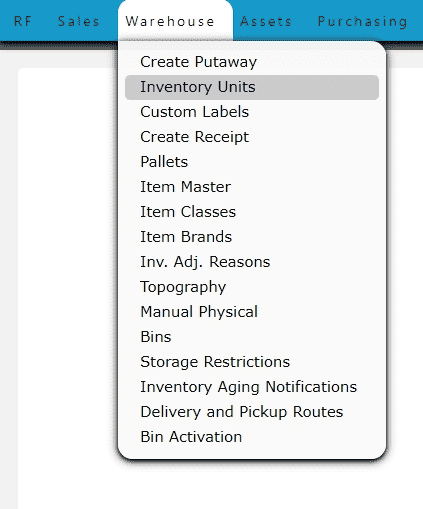
    1. Go to the Warehouse menu and click on the Inventory Units sub-menu.


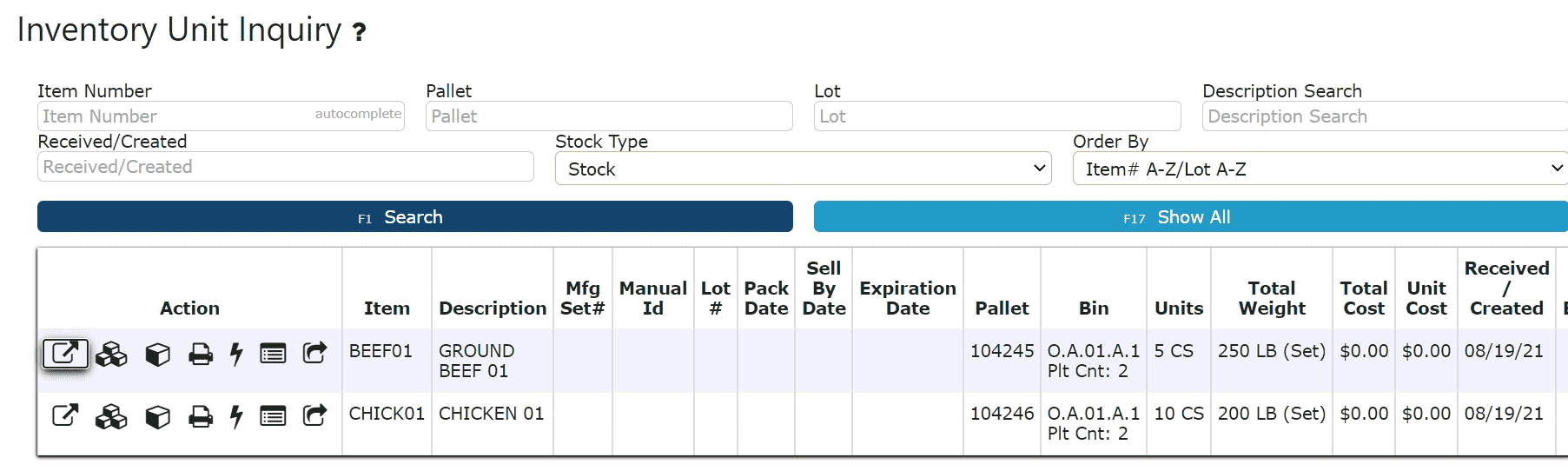
    2. Locate the pallet that needs to be moved and click the Specify Pull Queue icon under the Action column.


    3. Enter the Pull Date/Time and Pull Name, then click Save. Repeat the process for each additional pallet that should be included in the same Pull Queue, using the same Pull Date/Time and Pull Name.


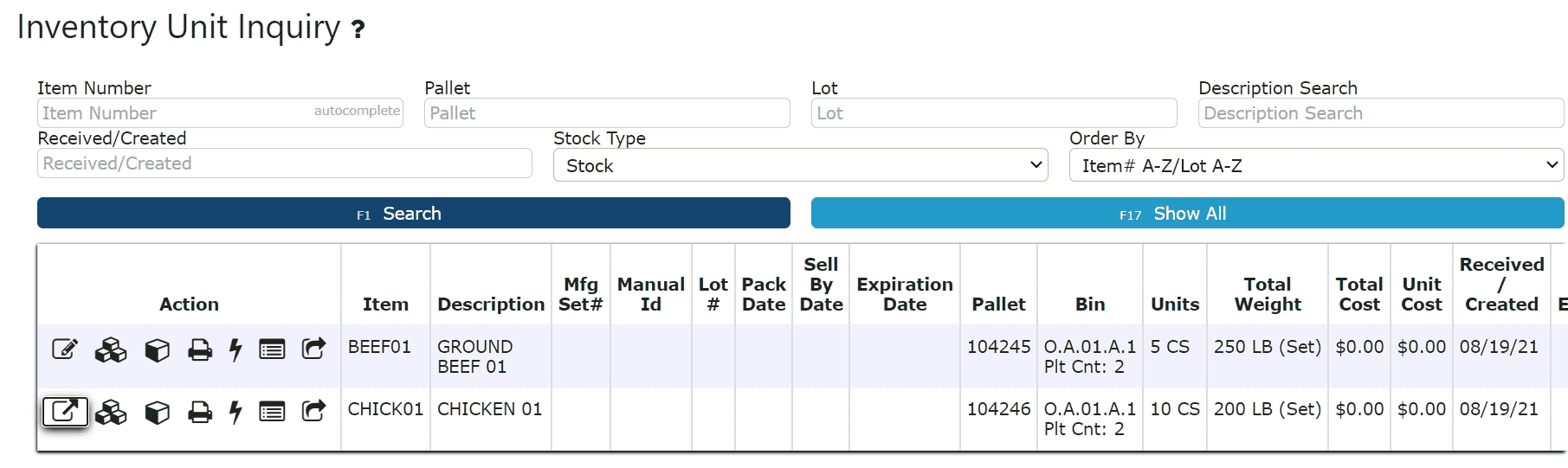
    4. For the next pallet to be moved to the pull queue, click on the Specify Pull Queue icon next to the next pallet.


    5. Enter the same date, time, and name as the previous pull. This ensures both pallets are added to the same pull in the Pull Queue.

    Note:
    Subsequent Pulls will automatically be assigned to the previous pull unless manually overridden by assigning the pallet to another date/time slot.


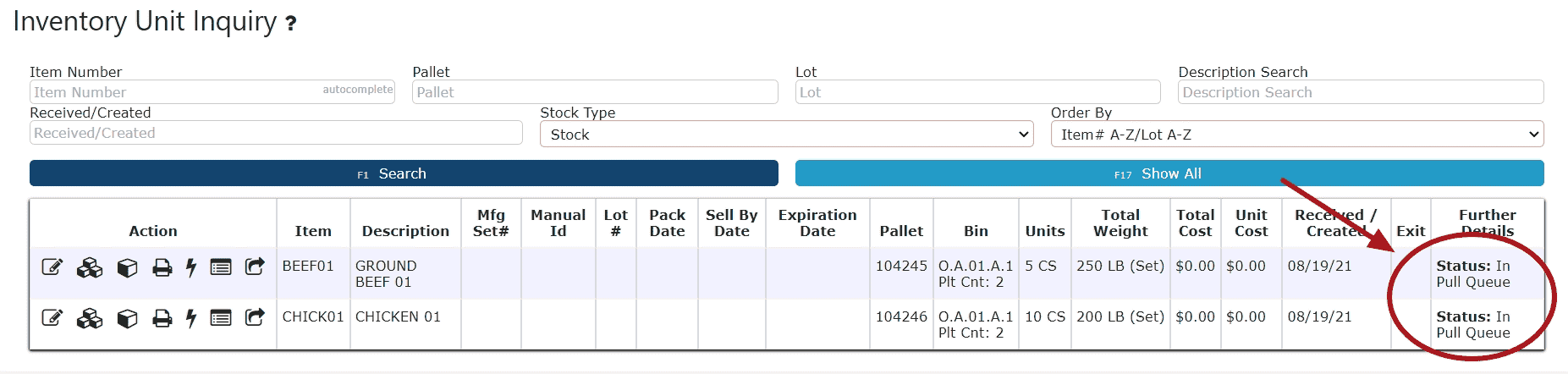
    Both pallets are now in the pull queue.


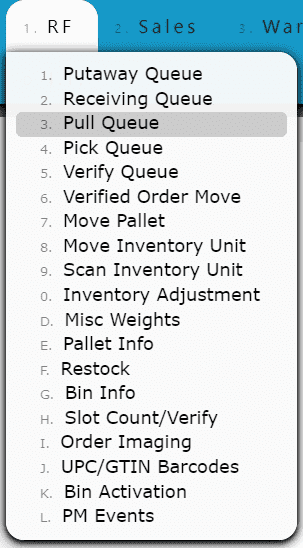
    6. Go to the RF Menu and click the Pull Queue Sub-Menu.


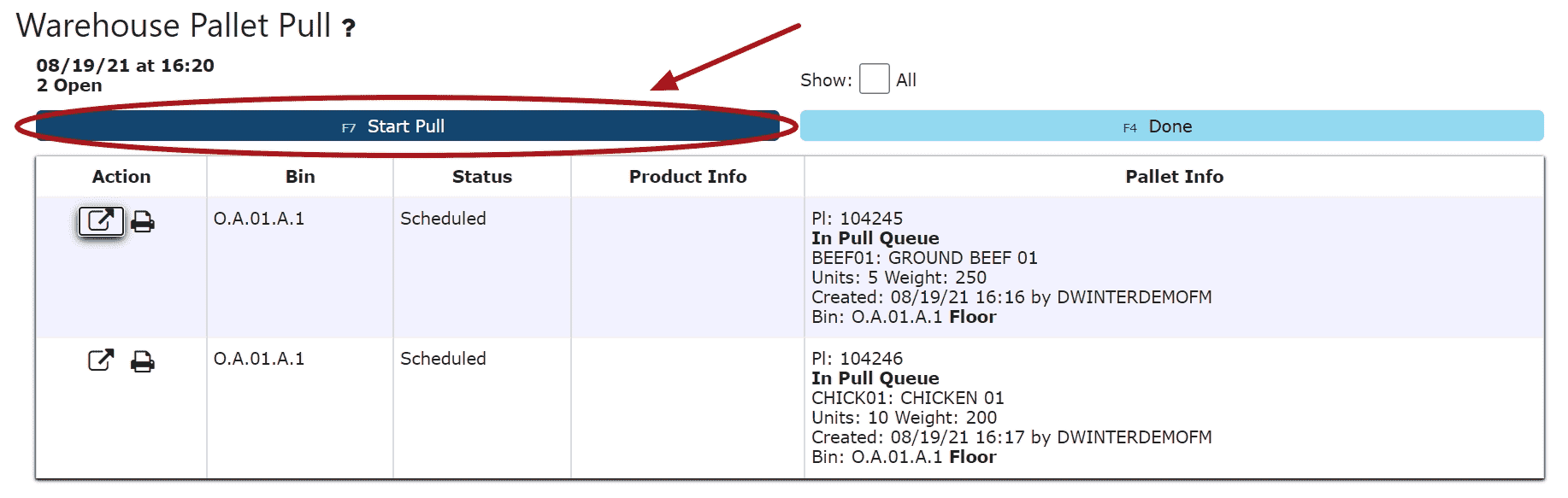
    7. Locate the corresponding pull that needs to be initiated in the Pull Queue; each date/time can contain one pull with one or multiple pallets assigned to it.


    8. Click the Initiate Pull icon for the pull that needs to be performed.


    9. Click the Start Pull button or the Pull icon to begin the pull.


    10. Enter or scan the Pallet ID of the pallet to be moved, then click the Next Step button.


    11. Enter or scan the Bin where the pallet will be moved, click the Next Step button, and confirm the move; use the Floor button if applicable, then repeat the process for each pallet in the queue.

  • Inventory Adjustments

    Inventory Adjustment Overview

    Inventory Adjustments are used to increase or decrease the quantity of inventory assigned to a pallet. Unlike Pallet Moves, which move an entire pallet to another bin, or Move Inventory Units, which transfer inventory between pallets, Inventory Adjustments change the actual quantity of inventory recorded in the system. Examples include:

    • Damaged product
    • Missing inventory
    • Found inventory
    • Quantity corrections after a cycle count
    • Receiving corrections
    • Miscellaneous inventory gains or losses

    Inventory Adjustments create an inventory transaction history and maintain an audit trail of inventory changes.

    When to Use Inventory Adjustments
    Use Inventory Adjustments when:

    • Inventory is damaged and must be removed from stock.
    • Inventory is found and needs to be added.
    • A cycle count identifies a discrepancy.
    • A receiving quantity was entered incorrectly.
    • Inventory quantities need to be corrected.

    Do not use Inventory Adjustments when:

    • Moving a pallet to another bin (Pallet Moves).
    • Moving units between pallets (Move Inventory Units).
    • Performing planned warehouse moves (Pull Queues).

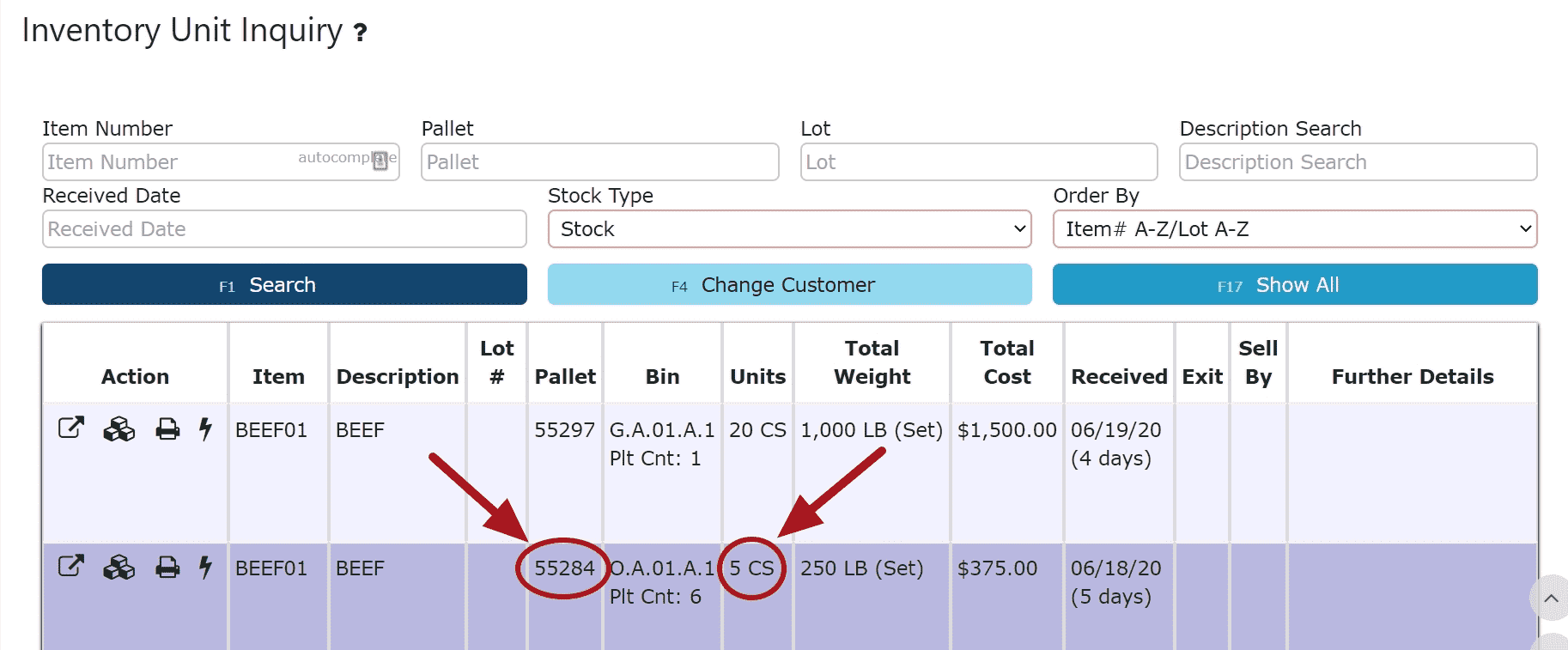
    Example:Adjust the number of units on pallet 55284 from 5 units to 4 units 


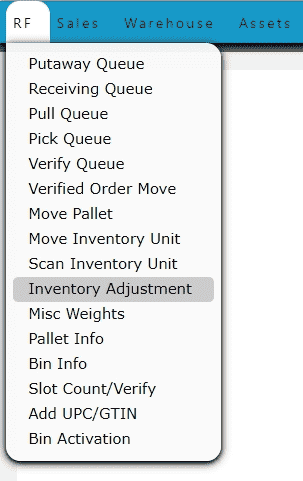
    1. Go to the RF Menu and click the Inventory Adjustment Sub-Menu.


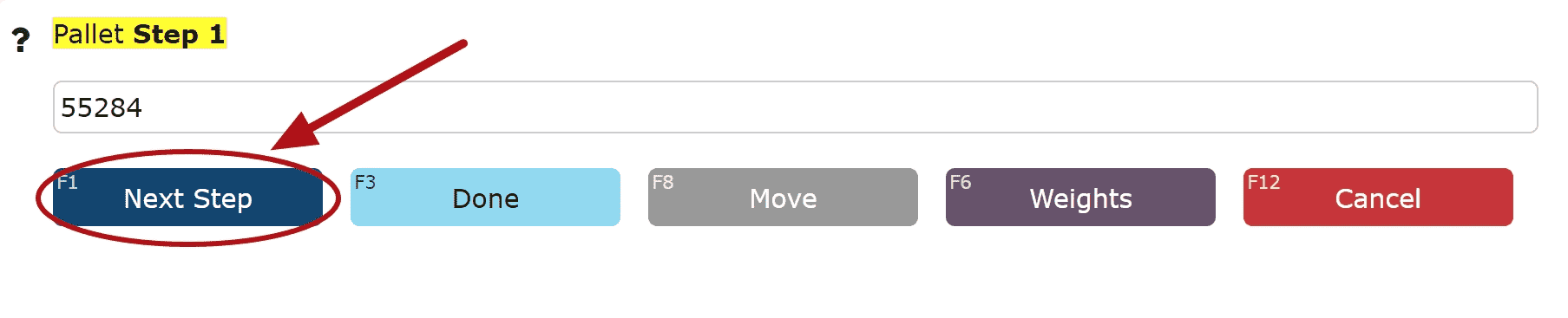
    2. Enter or scan the pallet that requires adjustment.

    3. If the pallet should be moved after the adjustment, enter a Pull Queue Name. Otherwise, click Next Step. This allows inventory corrections and pallet movement activities to occur together when needed.
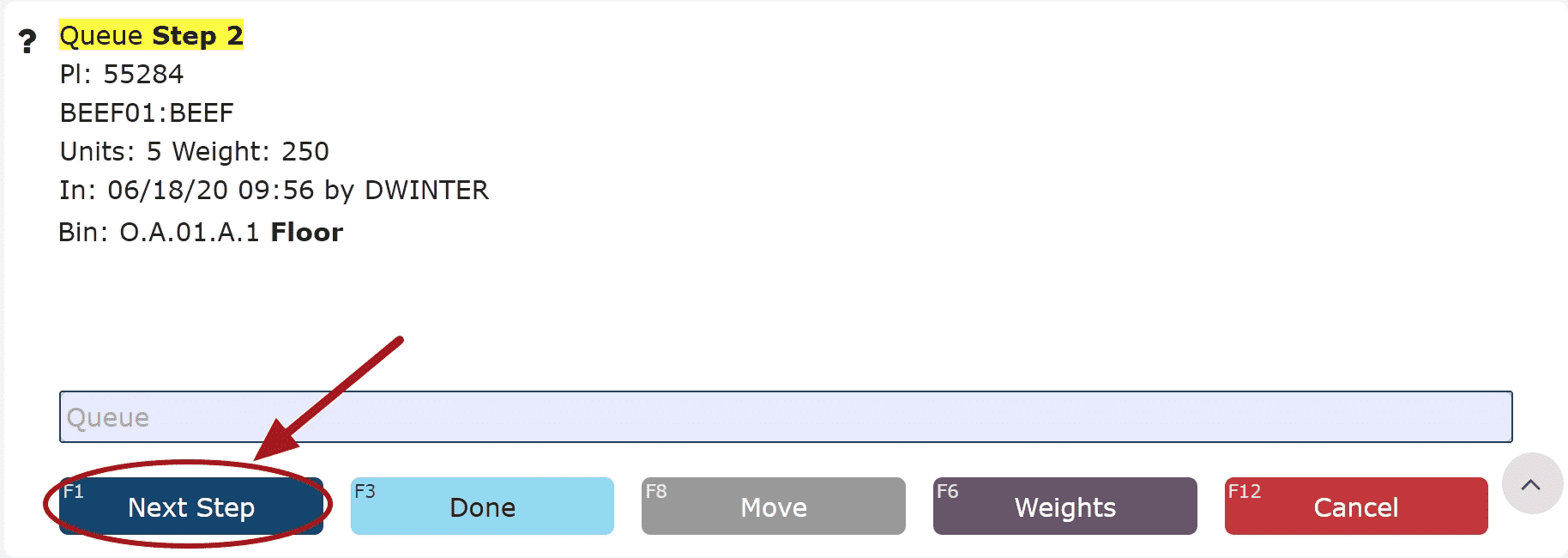
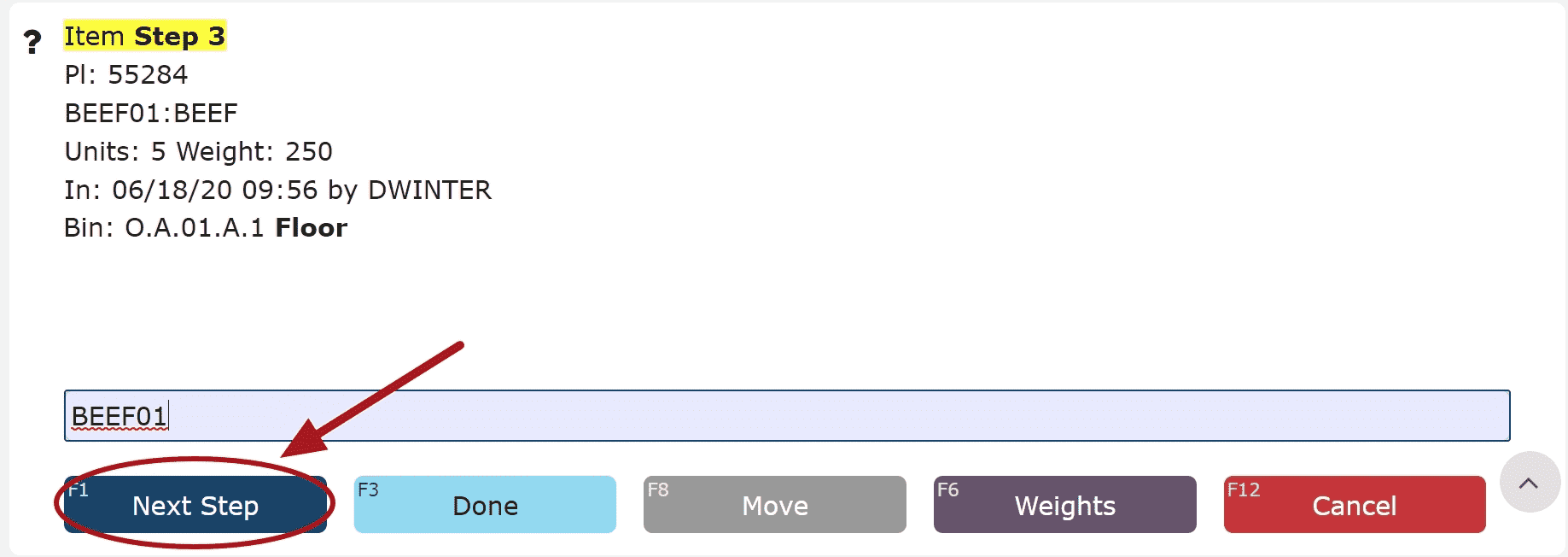
    4. Enter or scan the item using UPC, GTIN, or Item Barcode. Click Next Step.


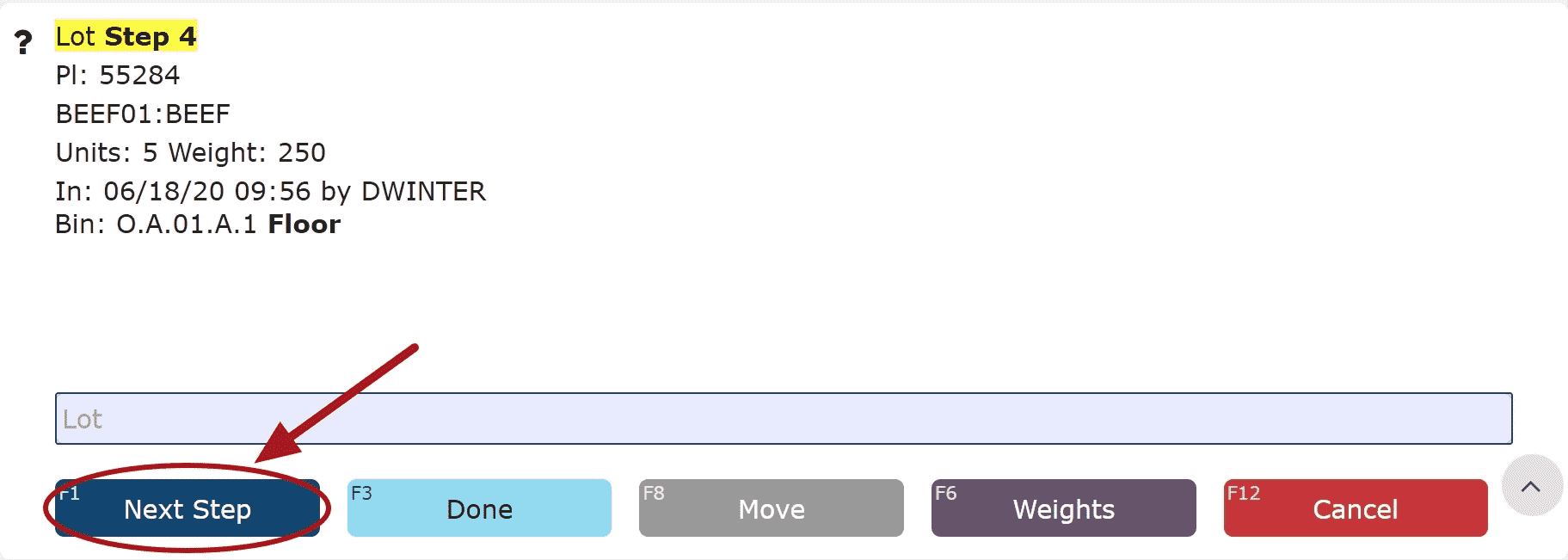
    5. If the item is lot controlled, enter or scan the appropriate lot number.


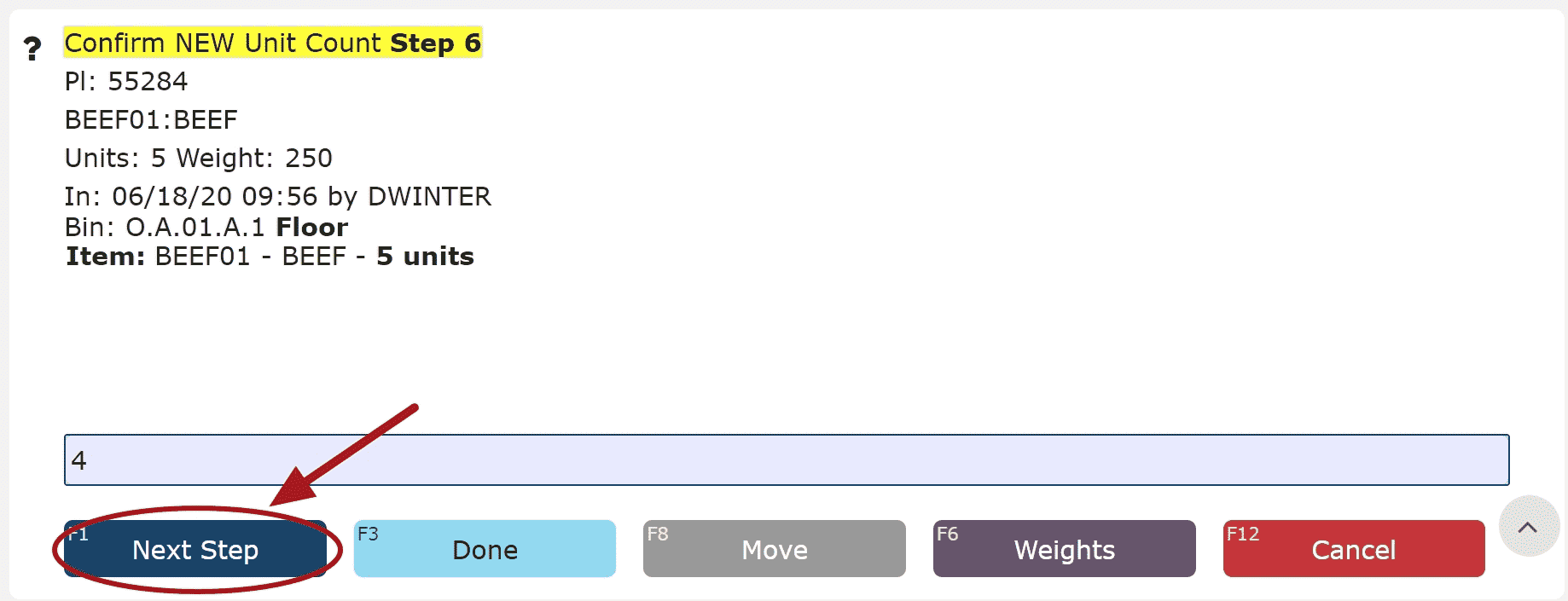
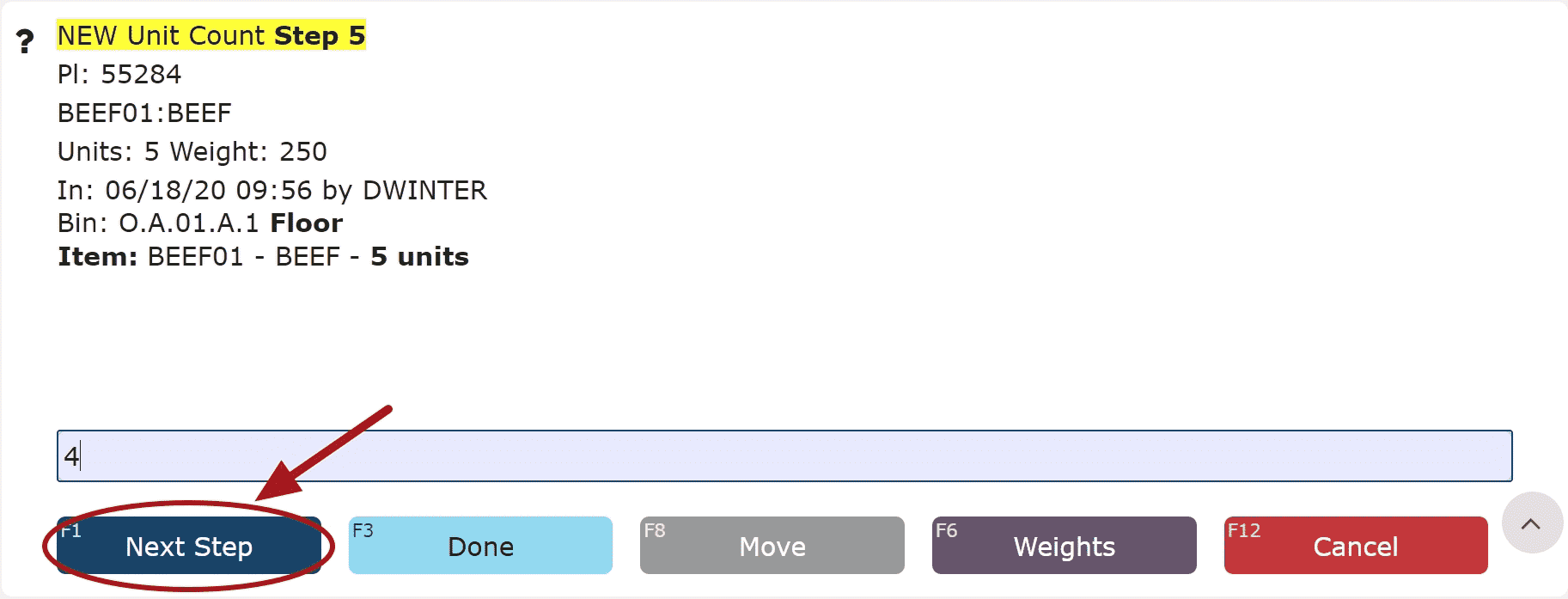
    6. Enter the new total quantity. Current quantity: 5 units. New quantity entered: 4 units Result: System adjusts inventory from 5 to 4.

    Note: Company setup dictates whether to enter a new unit amount, or the offset value.   


    7. Review and confirm the adjustment amount.


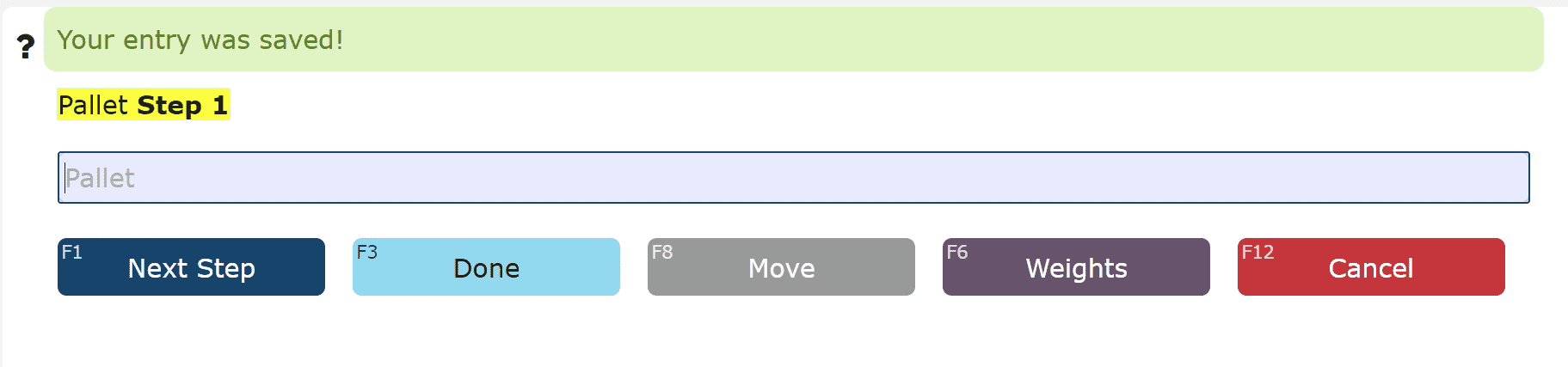
    8. The inventory adjustment is now complete. The pallet quantity has been updated in inventory.


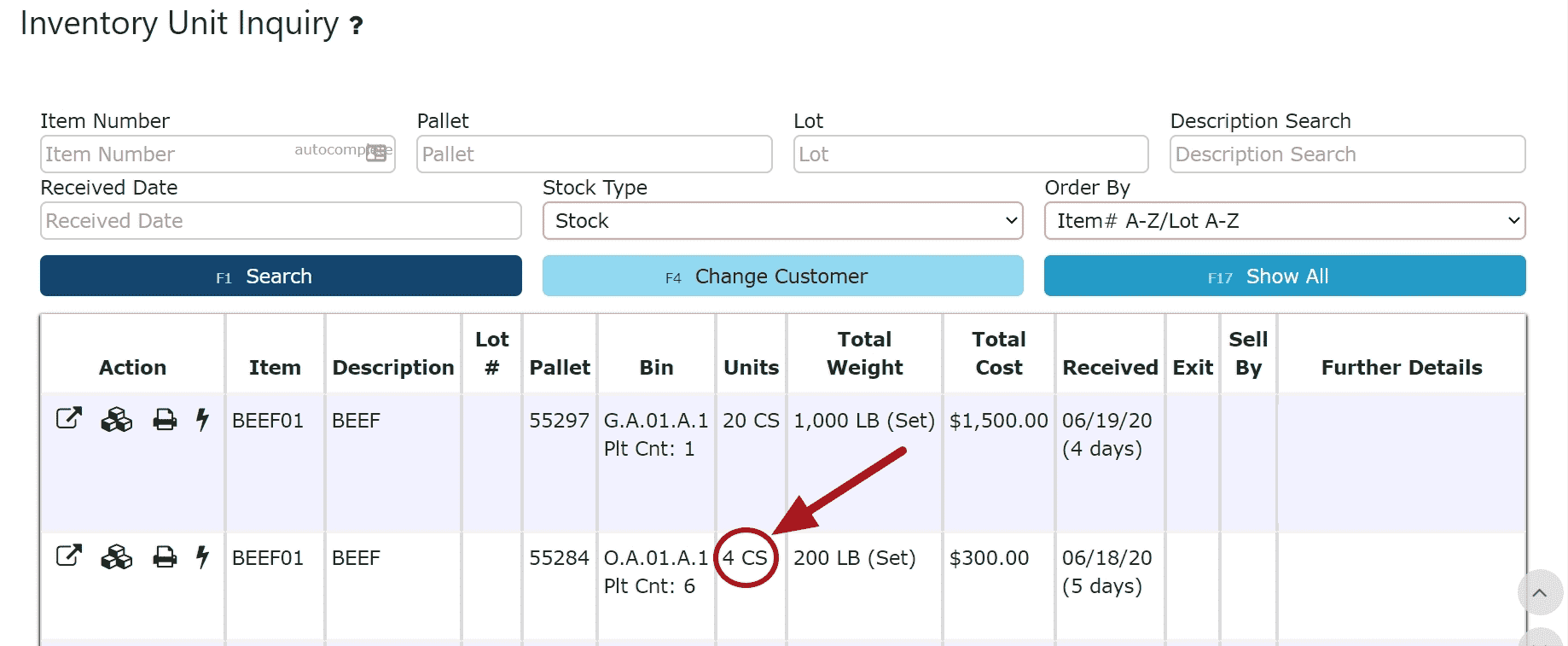
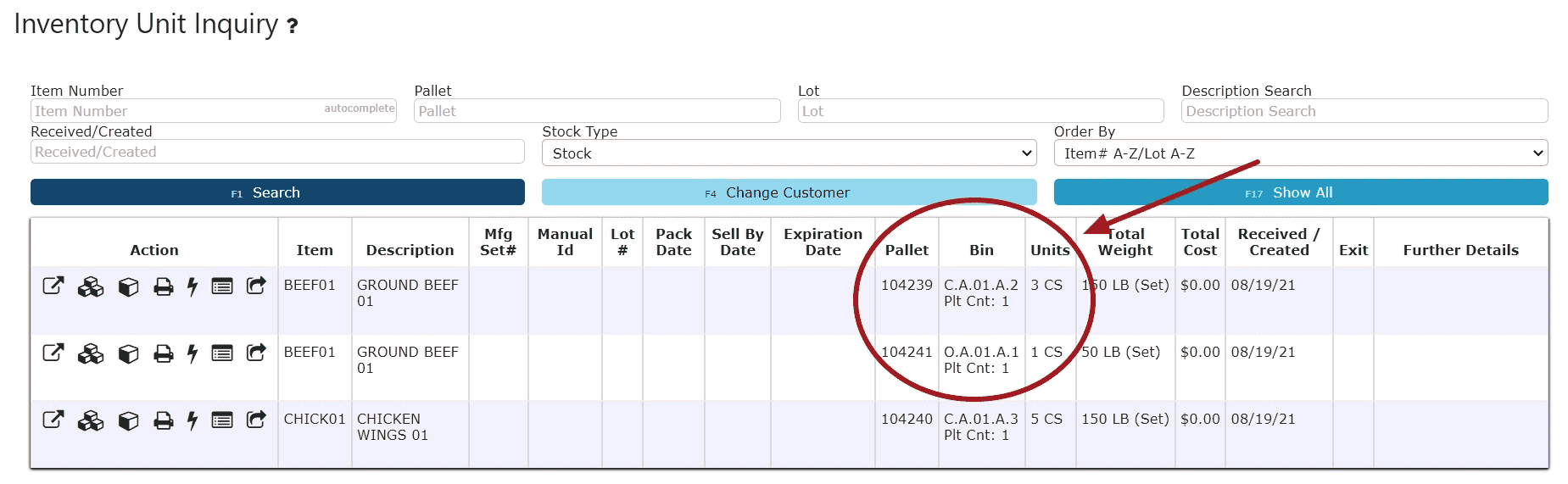
    9. View the pallet in inventory with the new unit count


    Viewing Inventory Changes
    Inventory adjustments can be reviewed through:

    • Reports → Inventory → Inventory Movement
    • Warehouse → Item Master → Inventory Activity

    These reports provide a history of:

    • Adjustments
    • Receipts
    • Orders
    • Unit Moves
    • Other inventory transactions

    This provides a complete audit trail of inventory changes. 

    Reason Codes
    Many organizations use adjustment reason codes such as:

    • Damage
    • Theft
    • Misc Adjustment Up
    • Misc Adjustment Down

    These codes improve inventory reporting and audit history.

  • Move Inventory Units

    Move Inventory Units Overview

    Move Inventory Units is an RF WMS Activity used to move a specific quantity of inventory from an existing pallet to another pallet. This is useful when only part of the inventory on a pallet needs to be separated from the original pallet rather than moving the entire pallet.

    For example, if pallet 104239 contains multiple units but one unit needs to be separated onto its own pallet, Move Inventory Units can be used to remove that unit from pallet 104239 and create a new pallet for the moved inventory. The original pallet remains in inventory with its remaining quantity, while the moved inventory is assigned to the new pallet.

    When to Use Move Inventory Units
    Use Move Inventory Units when:

    • Only some of the inventory needs to be removed from a pallet.
    • Inventory needs to be separated onto a new pallet.
    • A specific quantity needs to be transferred from one pallet to another.
    • A pallet needs to be split without adjusting the inventory quantity.
    • Inventory needs to be reorganized between pallets while maintaining the appropriate item and lot information.

    Important: If the entire pallet is being relocated, use Pallet Moves. If only some of the inventory needs to be separated from the pallet, use Move Inventory Units

    Moving Inventory Units to a New Pallet

    Example: In this example, 1 unit is being moved from pallet 104239 to a new pallet.


    1. Go to the RF Menu and click the Move Inventory Unit Sub-Menu.


    2. Click the New Pallet button. This creates the destination pallet that will receive the inventory being moved.


    3. Select the Source Pallet. Enter or scan the Pallet ID that the inventory is being moved from, then click the Next Step button.


    4. Select the Item. Enter or scan the Item using the item's UPC, GTIN, or Item Barcode, then click the Next Step button.


    5. Enter the Lot associated with the inventory being moved, then click the Next Step button.


    6. Enter the number of units to move, click the Next Step button, and confirm the move.


    7. The unit has now been successfully moved to the new pallet. Click the Done/Label button to complete the process and print the new pallet label.


    Important Notes

    Moving Part of a Pallet - Move Inventory Units should be used when only a portion of a pallet's inventory needs to be moved. If the entire pallet needs to be relocated to another warehouse bin, use RF → Move Pallet instead.
    • Item and Lot - The Item and Lot entered during the process identify the specific inventory being moved from the source pallet.

    • New Pallet - When using the New Pallet option, Inspired creates a new destination pallet for the inventory being separated from the original pallet. The new pallet can then be labeled using the Label button at the end of the process.

    • Catch-Weight Inventory - If the inventory being moved uses catch weights, this is where you want to distinguish Move Inventory Units from Scan Inventory Units in the KB. Move Inventory Units is used for moving a specified number of units, while Scan Inventory Units is designed for moving inventory using the scanned catch-weight information from the case barcode. The current WMS Activities documentation specifically separates these two activities. 

  • TO DELETE Scan Inventory Units
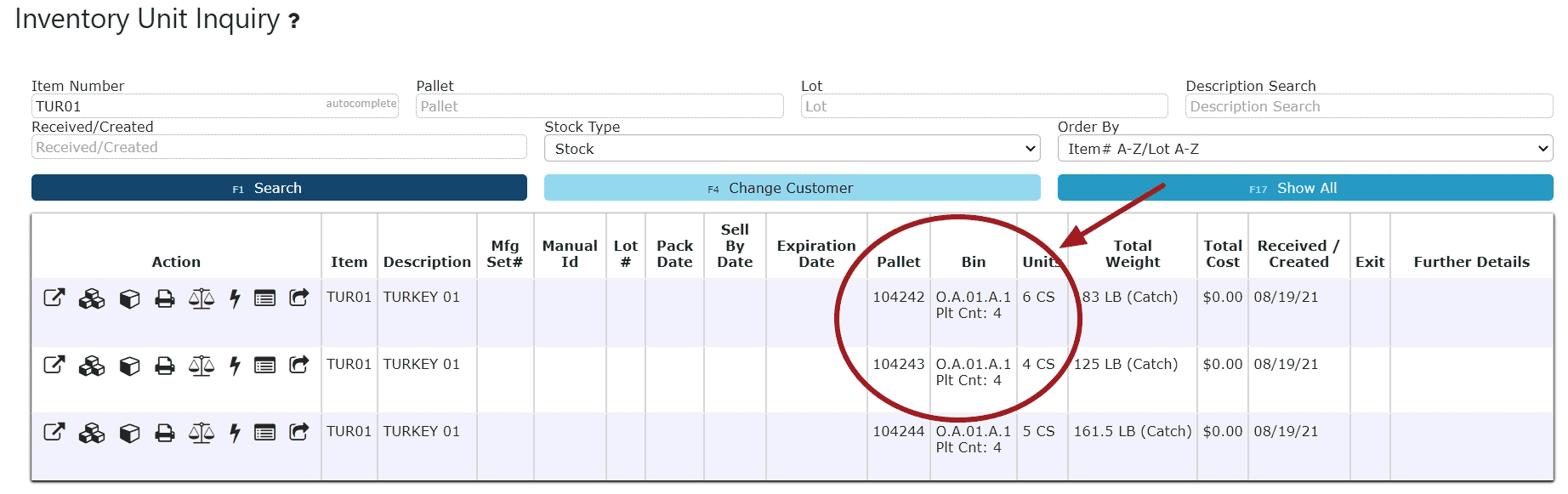
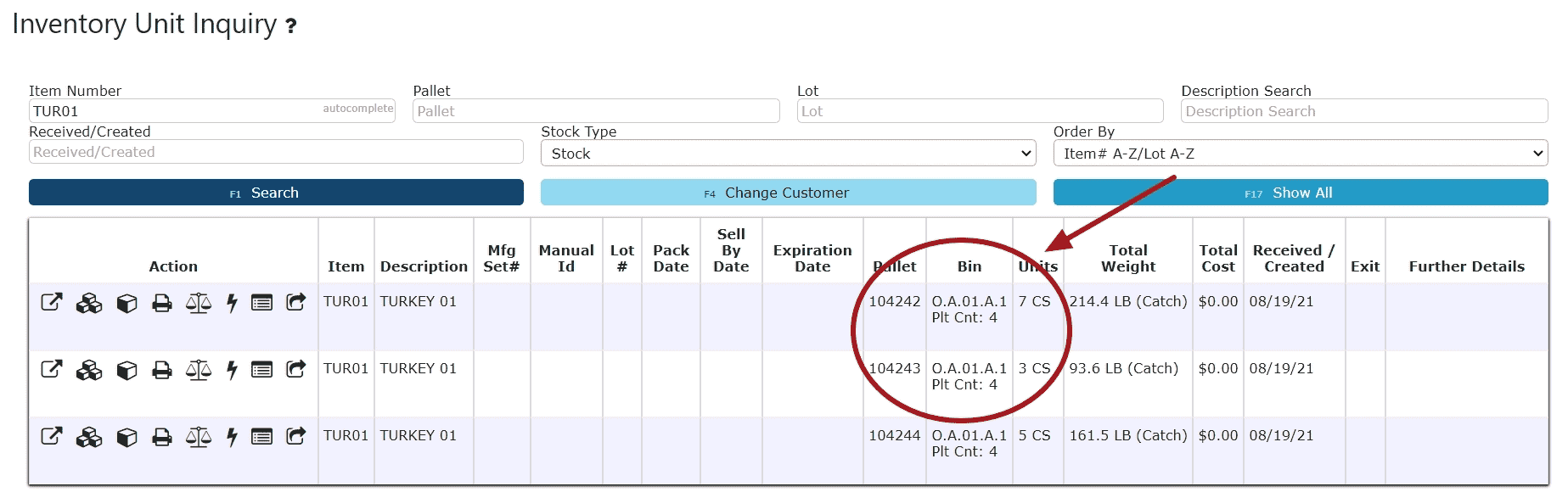
    Example: Moving 1 unit from pallet 104243 to pallet 104242


    1. Go to the RF Menu and click Scan Inventory Unit Sub-Menu

     
    2. Enter or scan the pallet to move into, or click the New Pallet Button,  then click the Next Step Button  
     
     
    3. Enter or scan the pallet the unit is being moved from, then click the Next Step Button  
     

    4. If applicable, enter the override lot# (the lot number currently associated with the inventory in the system which differs from the barcode's lot), then click the Next Step Button 
     

    5. Scan the case's GTIN barcode (barcode must contain a weight), then click the Next Step Button 

    Note: If there is no barcode to scan, click the Next Step Button to skip this scan step and manually enter the information 


    6. Continuing scanning until all units have been moved, then click on the Done/Label Button to print the new pallet label once all moves have been completed 


  • Miscellaneous Weights
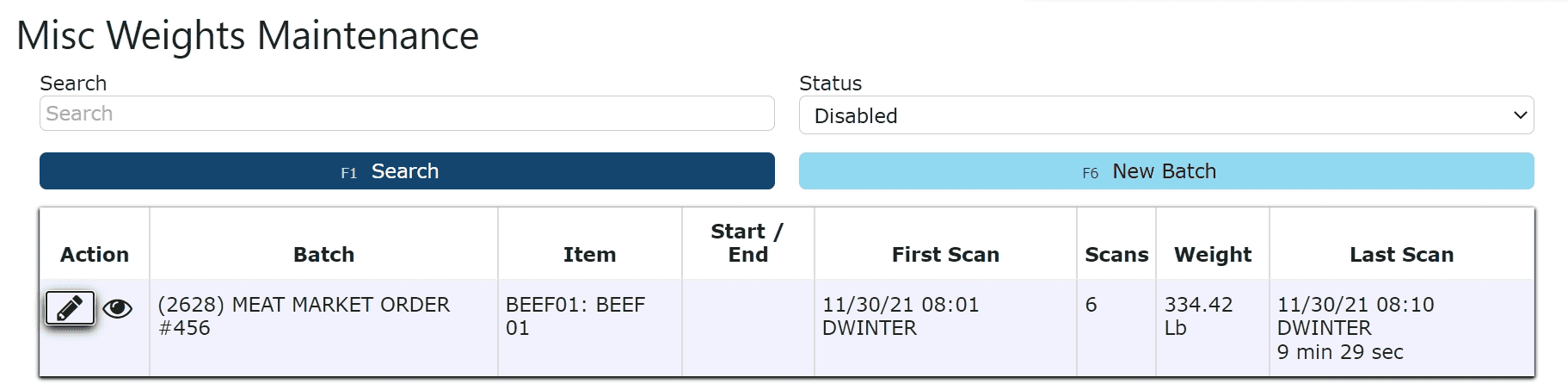
    Scan or gather weights for a particular item/sku, order or for any other miscellaneous purpose into a stand-alone misc. weights batch. 

    Creating a Misc. Weights Batch


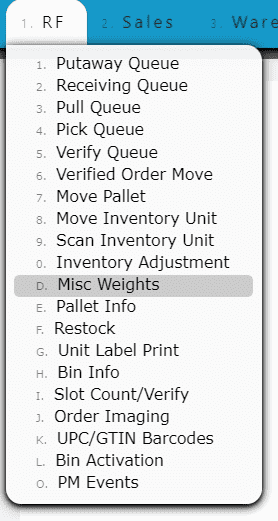
    1. Go to the RF Menu and click on the Misc. Weights Sub-Menu 


    2. Click on the New Batch Button 


    3. Fill in the item number and description, then click on the Save & Details Button 

    Note: A "start/end" weight option can be specified to denote the "start" or "end" result of a process.  


    4. Either enter the weight manually within the Weight Field, or scan a barcode containting the weight within the Scan Field 

    *Repeat until all weights have been added to the batch 


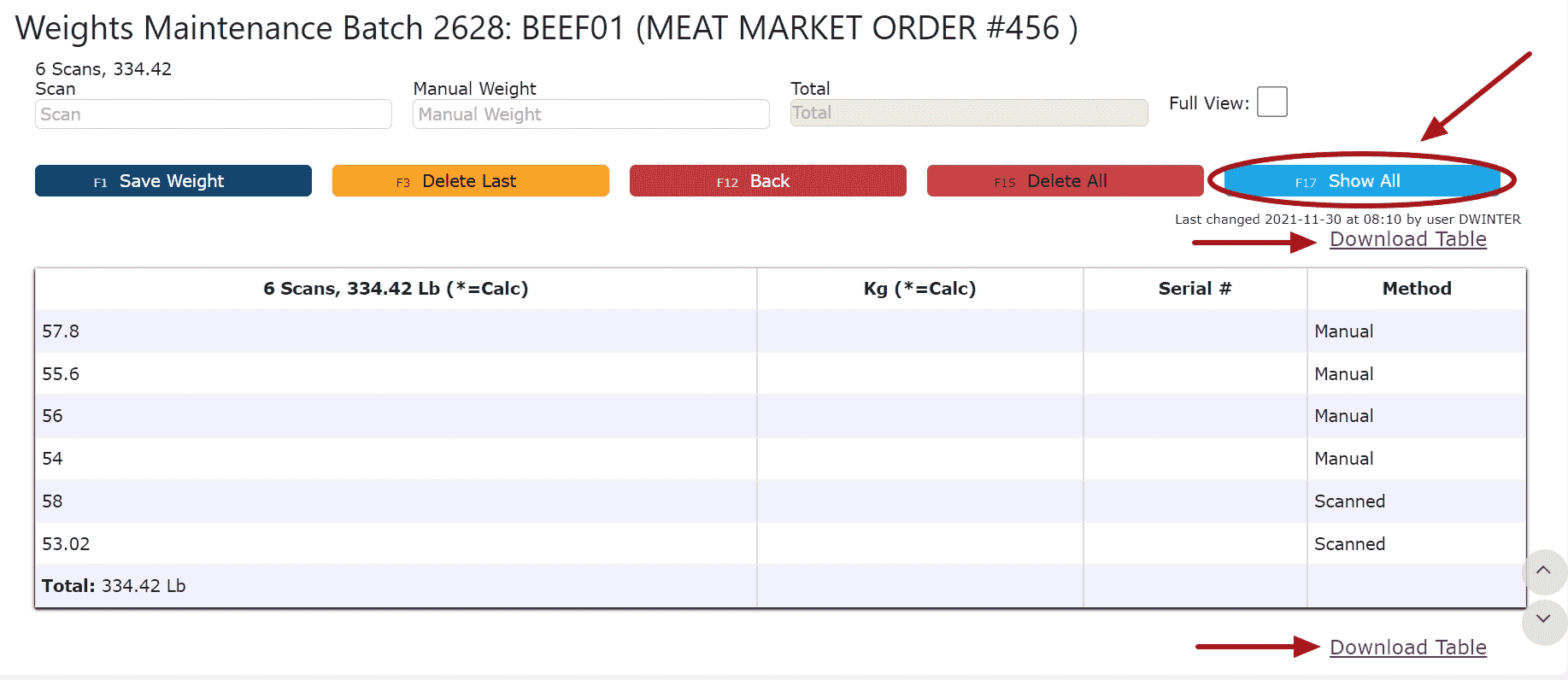
    5. Click the All Entries Button to view a list of all the weights 


    6. Use the Show All Button and the Download Table link to download an excel spreadsheet of the table 


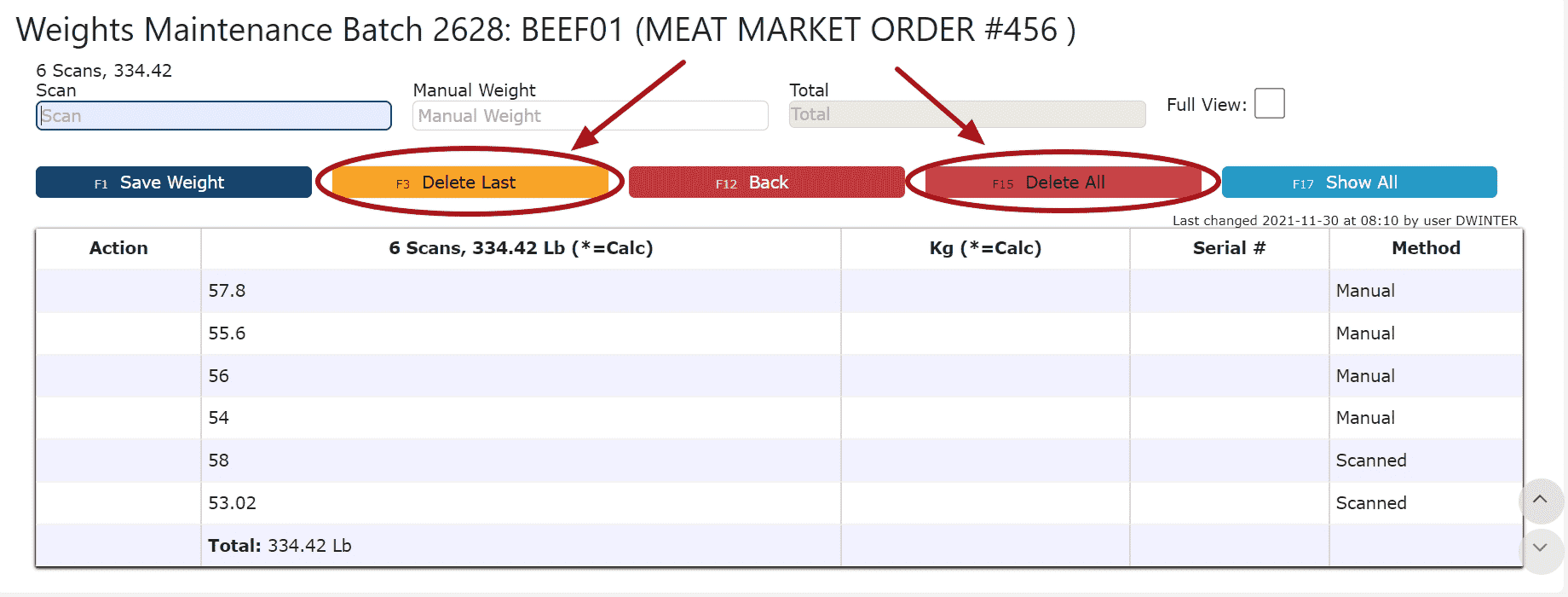
    7. Use the Delete Buttons to remove unwanted weights 


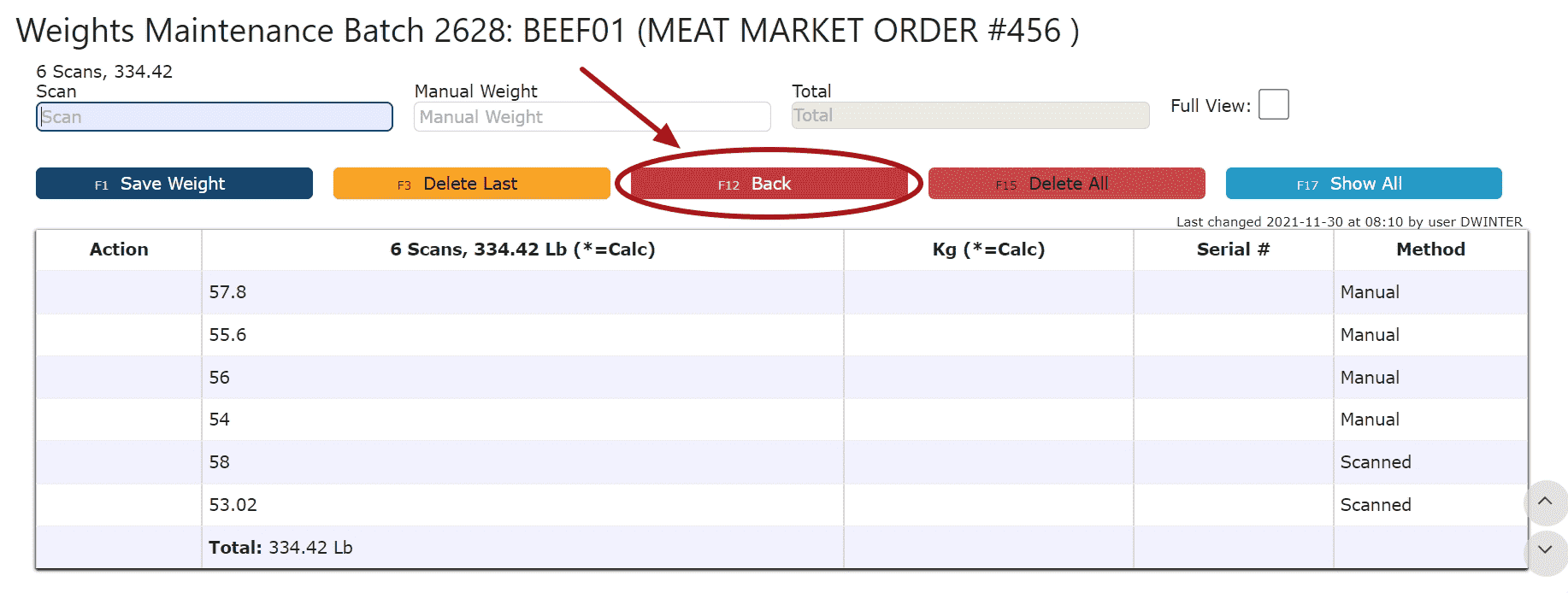
    8. Click the Back Button until editing the main batches screen, then select the Save & Exit option to save the batch 


    Disabling a Misc. Weights Batch


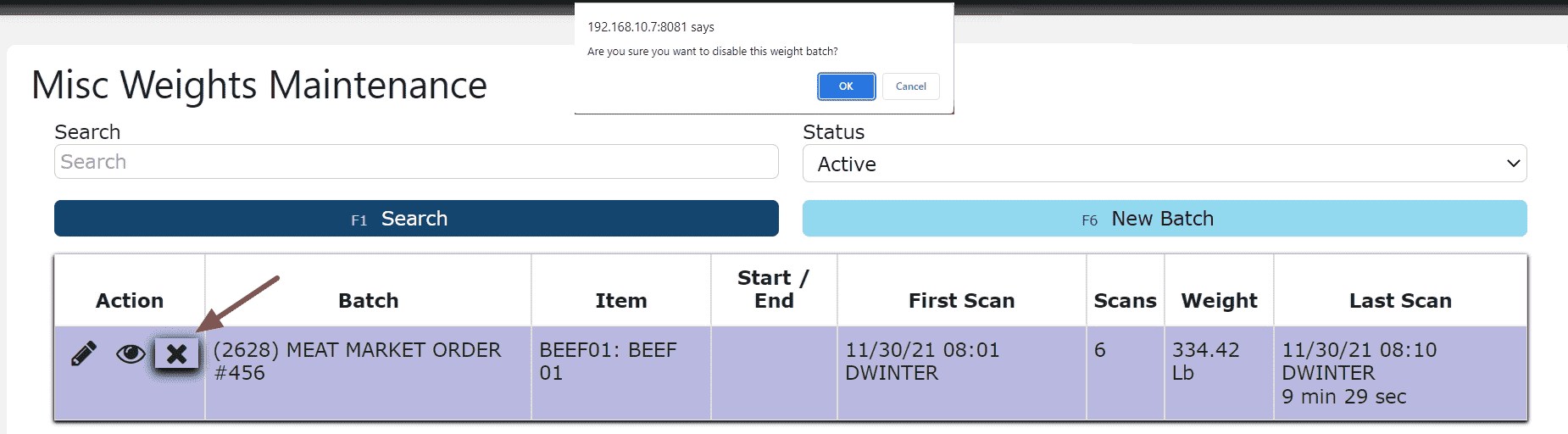
    1. Click on the Disable Weight Batch icon and select OK on the pop-up prompt 


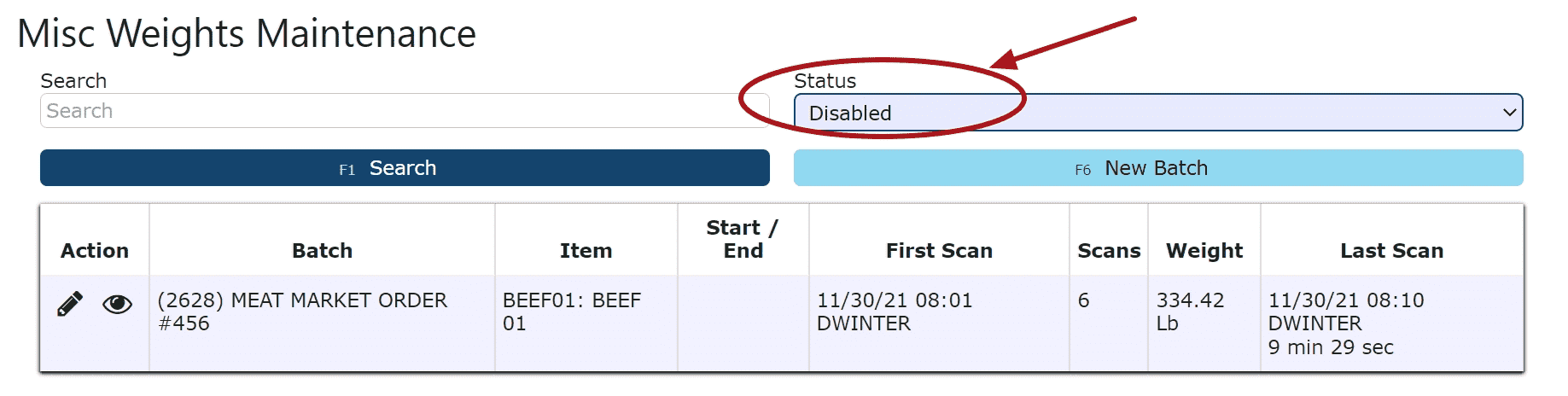
    2. The Misc. Weights Batch is now located under the disabled batches 

    Note: Misc. Weights Batches can be disabled but not deleted 


    Activating a Misc. Weights Batch

    1. Locate the Misc. Weights Batch under the list of disabled batches 


    2. Click on the Edit Weights icon 


    3. Select Active from the Status Dropdown and save the batch 


    Manufacture Start/In Misc. Weights Batches

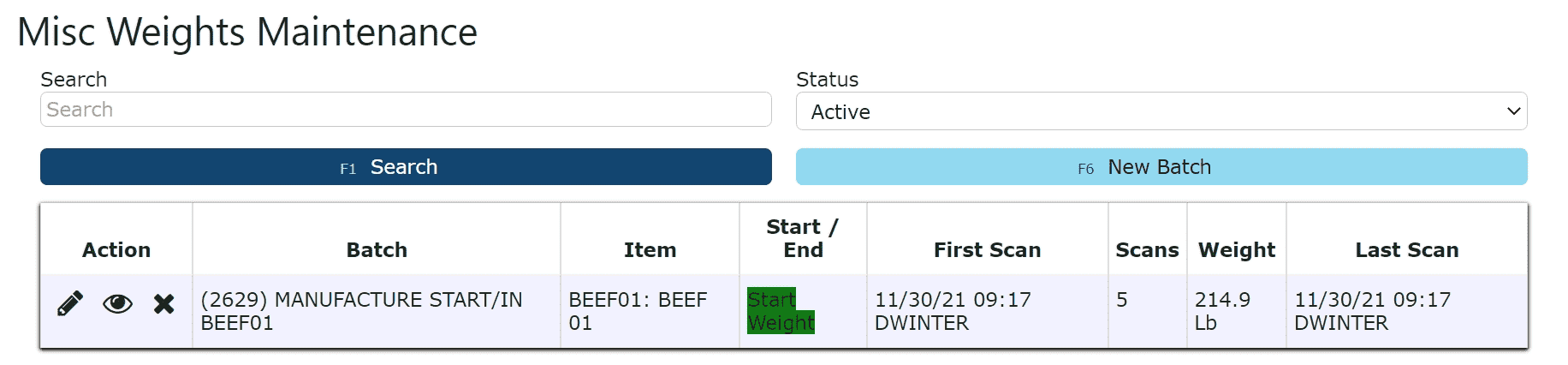
    A misc. weights batch will automatically be created containing the weights from "destroyed" pallets that have been utilized during the manufacturing process